
'/%3E%3C/svg%3E)

Environmental requirements no longer come only from the authorities. They come from customers’ specifications, since those customers need certifications of their own.
The good news is that in blasting, the environmental choice usually coincides with the economical one.
The abrasive that comes back into the circuit
The fundamental difference is between abrasive that recirculates and abrasive consumed in a single pass.
Metallic abrasives — steel shot and grit — circulate through the installation hundreds of times. They are separated, cleaned, and returned to the wheel. They are consumed gradually, not all at once.
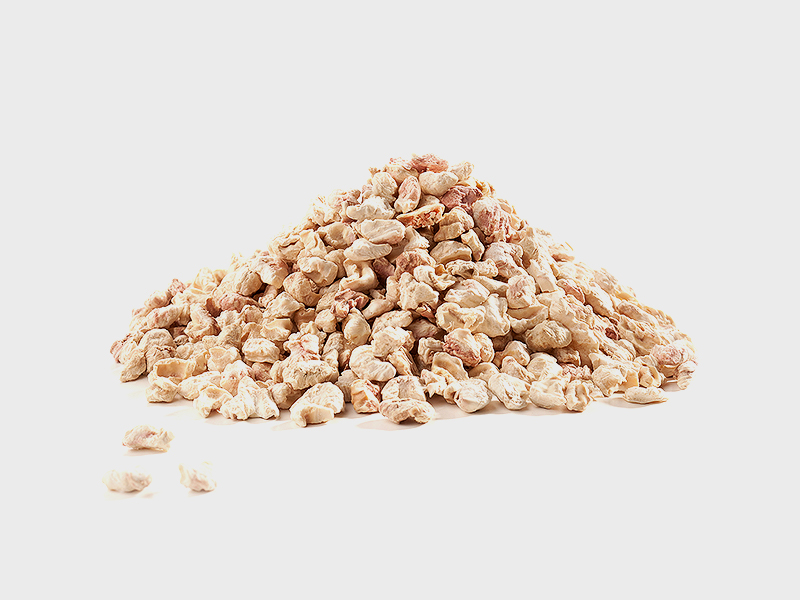
Single-use mineral abrasives become waste after one use. The volume of waste is comparable to the volume of abrasive purchased.
At a consumption in the order of kilograms per tonne of parts, the difference in waste generated between the two approaches is tens of times over.
What this means for cost
Recyclable abrasive costs more to buy and less to use. On top of that, it eliminates the disposal cost — which keeps rising.
The comparison is made on cost per part, including waste treatment. Not on price per kilogram.
Dust: where it actually goes
Dust does not disappear. It is only moved.
In an installation with correct filtration, the dust ends up in a collector and is discharged under control. In one without, it ends up in the workshop, in people’s lungs and, eventually, outside as well — but uncontrolled.
Filtration is not an environmental expense. It is the condition under which the installation operates legally and the people stay healthy.
Alternatives with no abrasive to throw away
Dry ice cleaning. The medium sublimates. Nothing is left to collect apart from the material removed from the part. Particularly useful on sensitive components and for paint removal.
Closed-circuit wet blasting. The water is recovered, filtered and reused. Dust is captured from the start in the liquid medium.
Closed-circuit vibratory finishing. Waste water is recovered instead of going to drain. Compound consumption rises, but the waste water treatment cost disappears.
What changes in the installation
Moving to a low-impact solution usually means three things:
- An abrasive recirculation circuit, with efficient separation
- Correctly sized filtration, not improvised
- Water management, where the process is wet
All three cost at installation. All three are recovered in operation.
Related reading
- Industrial dust filtration: self-cleaning solutions
- Which blasting abrasive should you use? A guide by type
- Controlling dust in blasting: enclosure, ventilation, protection
- Wet blasting: when to choose it over dry
- Blasting stainless steel without ferrous contamination
Not sure which equipment fits your parts? A Vibroblast specialist visits your factory, analyses your parts and current process, and recommends the right solution — even if that means a cheaper machine than you expected.
Book a free on-site audit